A lesson in olives
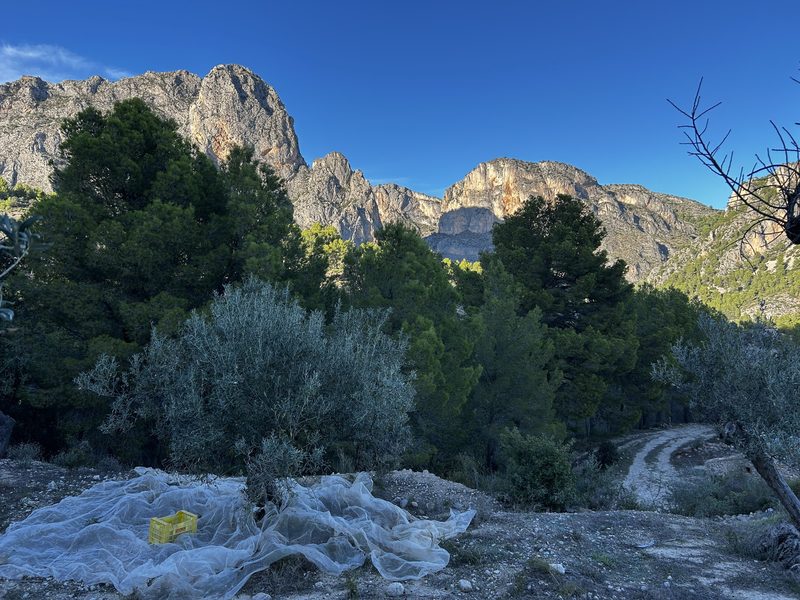
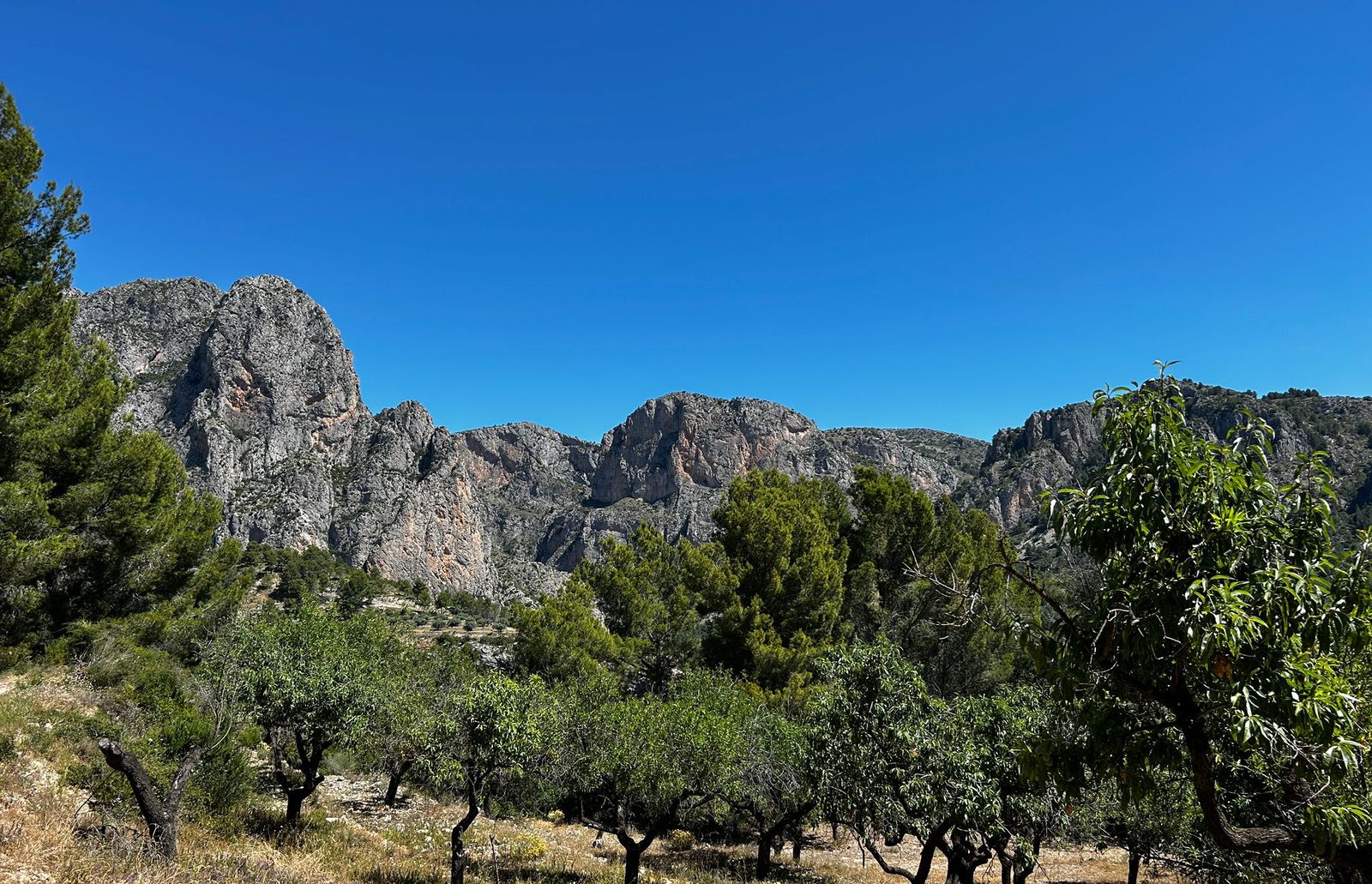
A special day this Saturday. The previous owners were so kind as to meet up with us on the land and show us when and how to harvest the olives, carobs, lemons and oranges. How to prune the trees and how to take care of them. After just a week of Spanish classes our Spanish wasn’t that great yet, but with a little bit of hand and feet action we managed to get by.
The previous owner has had the land for a little over 50 years and, we could clearly tell, has a lot of memories at this beautiful place. From swimming in the balsa when they built it back in 1992 to old markings when they had sleepovers in the house. If trees could talk, I am sure the 70-100-year-old grapevine covering the porch next to the house would be able to share some stories as well.
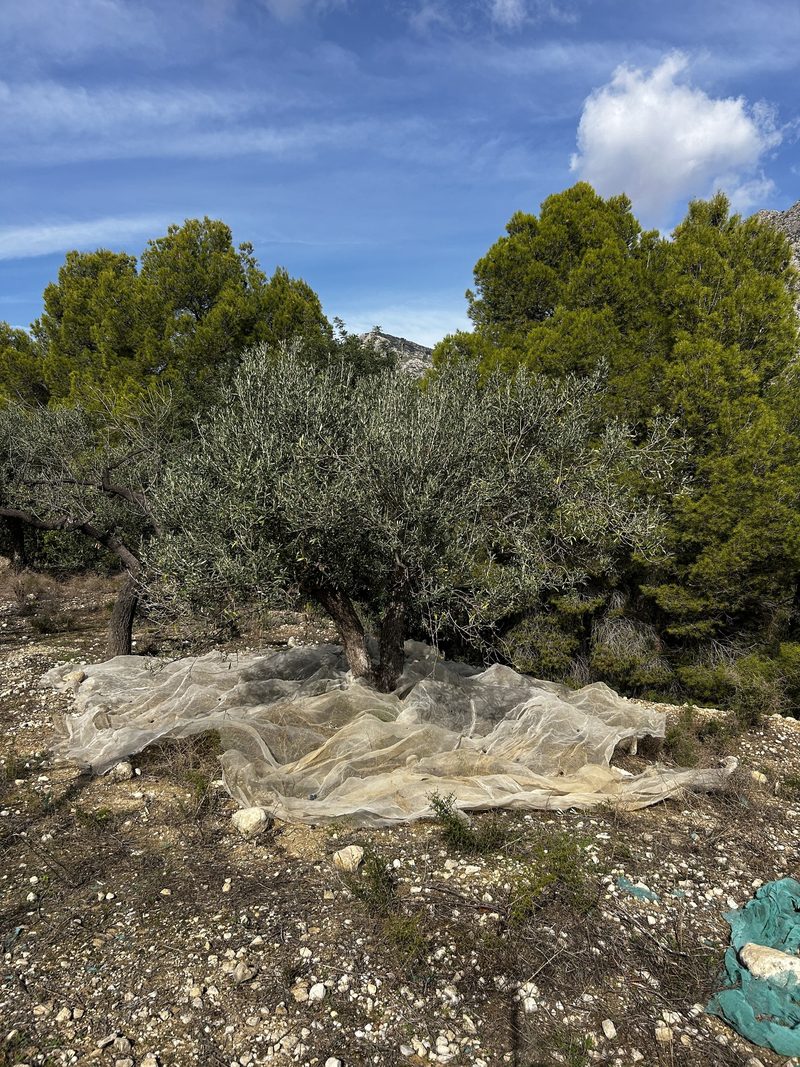
They handed over their old harvesting sticks and they showed us how to place the nets, hit the trees, what to prune and what he used to do to keep the trees going. With roughly 40 mature olive trees (between 200-400 years old) this (as with most things on the land) takes some time and effort. It was lovely to see them recall old memories and passionately show us around the land. Explaining things which for them were obvious but we had only seen for the first time. As an example, we were unable to figure out why all the lower branches of our lemon and orange trees were completely picked clean except for the fruits themselves. Turns out that is the mountain goats’ doing. Munching away everything in reach.
After spending a couple of hours on the land chatting away, they invited us to their house to give us some of their harvesting crates. When they told us that during good years they harvest around 1,000 kg of olives, which after pressing would give us around 200 litres of pure olive oil, this got us very excited. Eager to have olive oil from our own land, we reached out to the cooperative and made an appointment to have our olives pressed. Went ahead and excitedly planned a day of harvesting olives with friends and made the necessary preparations.
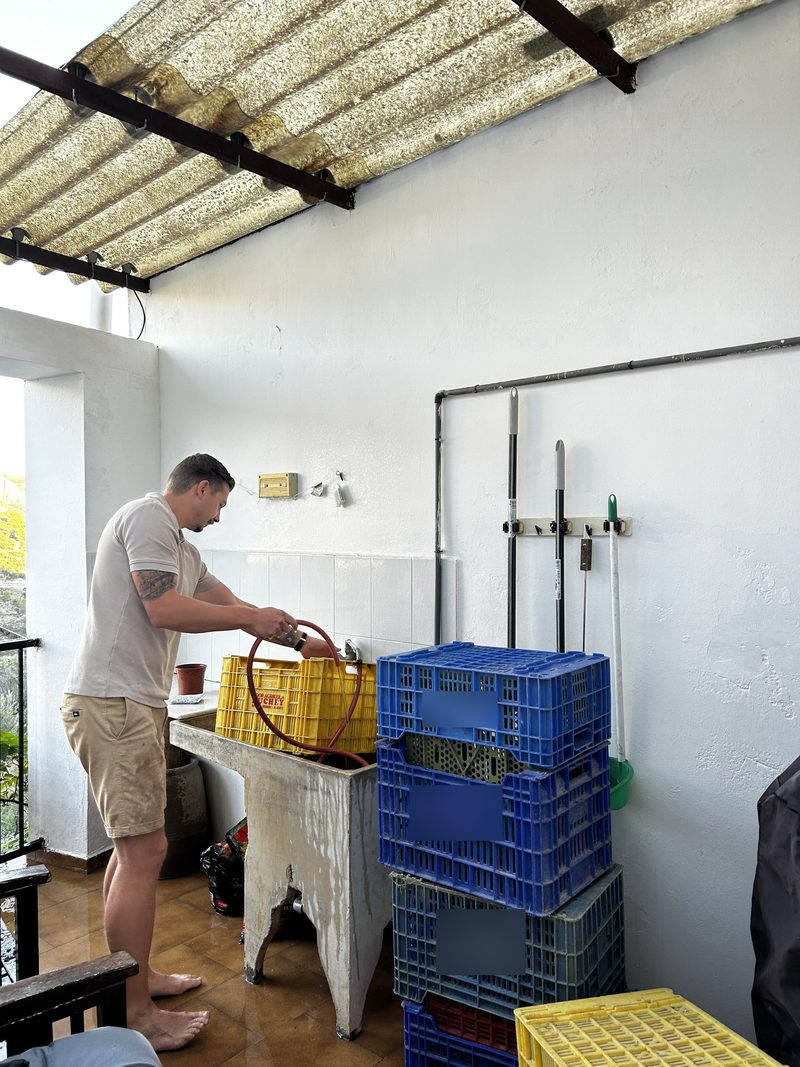
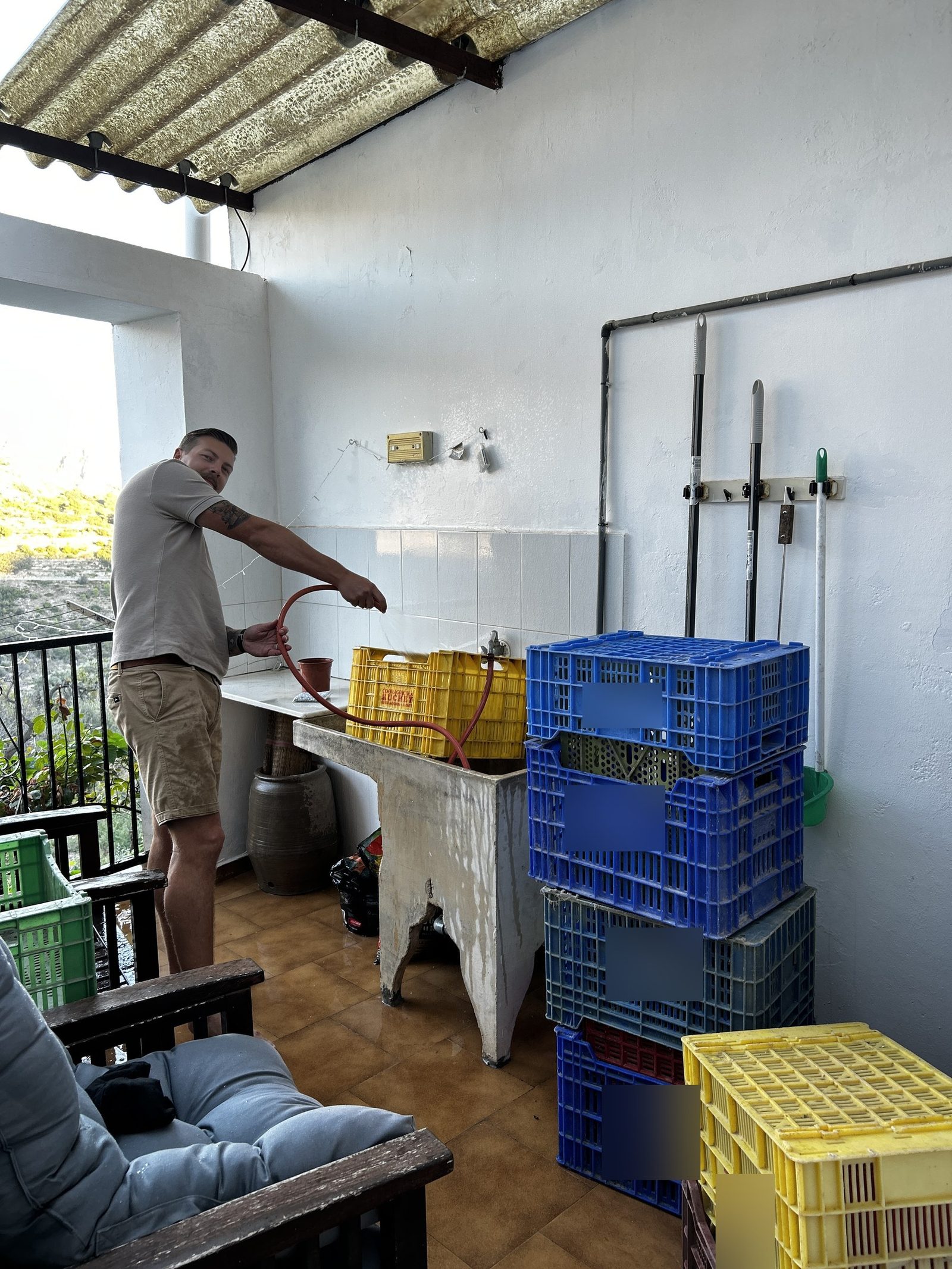
At home I excitedly started cleaning all the harvesting crates, getting them ready for the planned harvesting day next week. Having to reach at least 400 kilograms for the olives to be pressed by the cooperative, I needed to wash around 25 crates. Once again more time-consuming than I thought, but with the temperatures still up it was not an unpleasant task.
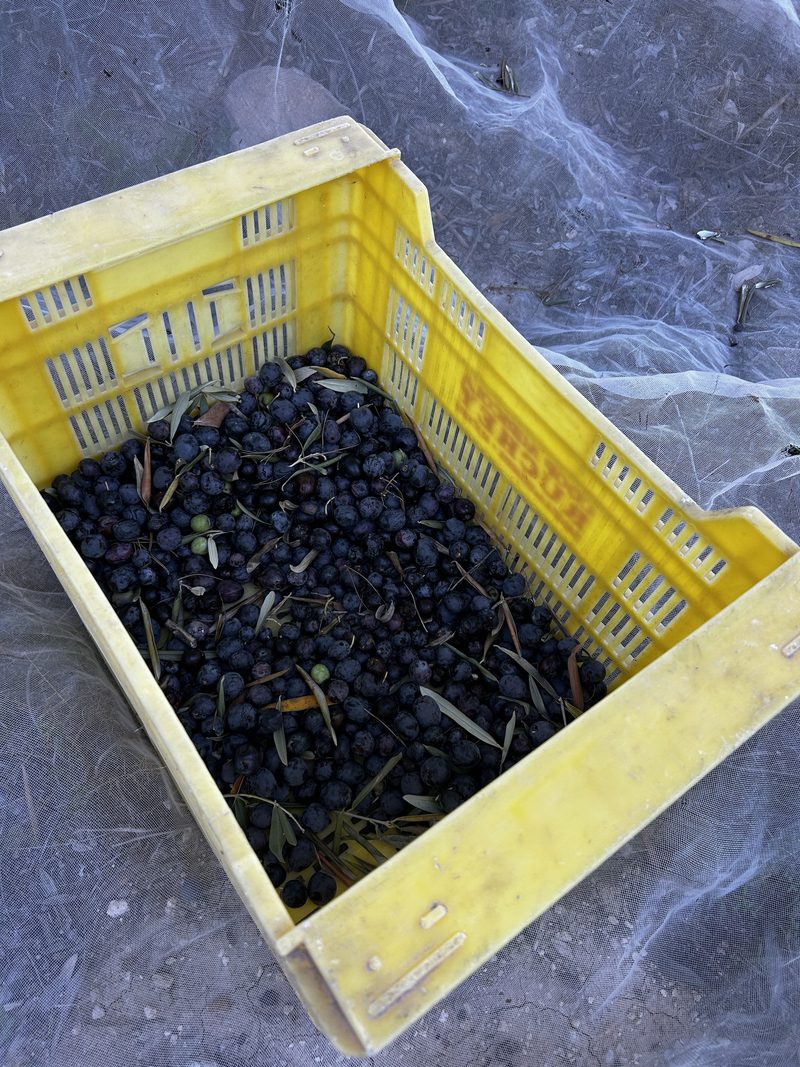
The next day we headed back to the land to take a closer look at the olive trees, how many olives we expected to get out of them and how we wanted to prune them later on after harvesting. Since last year was not a good weather year for the olive trees, that is reflected in this year’s harvest. In general (in most regions) olives usually produce really well one year and a lot less the next, so a good harvest alternates between the years. After fully harvesting 1 tree to see how much we would roughly be able to expect, it was a little bit disappointing. We only got a couple of kilograms from the tree and it was one of the bigger trees we have. Seeing that we would not be able to reach the minimum weight we would need in order for the cooperative to press our olives. After some contemplating and discussing, we sadly had to call off the planned harvesting day next week. It would not be fun to have friends spend a day working hard on our land to walk away with nothing in the end. The response to the initial plan was very positive, so we definitely plan to do this next year!
More photos
Comments
We love hearing from you.